Growth Library
Insights > Growth Library > How growth works > Scalable business
Step 5 of 5 · Scalable business
Build and scale the business
Turn the validated offering into a reliable, repeatable business by fixing the constraint that currently prevents scale.
STEP 5 DECISION
The solution, delivery model and economics can repeatedly deliver the promised customer result at a controlled level of risk and cost.
REPEATABILITY IS THE REAL TEST
Scale exposes whatever the demo could quietly work around.

Scale the constraint, not just demand
If data onboarding is manual, experts interpret every exception or partners use different escalation rules, selling more only multiplies the exception.
Name the kind of capability gap
Different businesses hit different constraints: some need standardised onboarding and integration, some need connectivity and device management at volume, some need data, analytics or AI to make the offer consistent, and some simply need a support and lifecycle model that can carry more customers. Name the actual gap before deciding how to close it.
Repeatability is the evidence gate
Check customer value, buying, onboarding, delivery, reliability, support, capacity, price, cost and margin. Scale the pattern that evidence shows can repeat.
Find the constraint before increasing volume
Look for the part of the system that prevents repeatable value: data onboarding, embedded connectivity, exception handling, integration, security review, customer onboarding, partner responsibilities, support capacity or margin. Make that constraint visible before adding customers.
Design the production system around the need
The fix follows the constraint, not a fixed toolkit: standardise what onboards inconsistently, harden what fails under load, automate what an expert currently interprets by hand, or add the oversight a compliance or security requirement demands. Select the fix because it removes the constraint, not because a capability happens to be available.
| Scale area | Evidence before commitment |
|---|---|
| Customer value and demand | The target result recurs in a defined customer and situation. |
| Onboarding and delivery | Roles, data, integrations, exceptions and responsibilities can be repeated. |
| Reliability and lifecycle | Monitoring, support, security and change management fit the operating environment. |
| Economics | Price, delivery cost, support cost and margin work at the intended pattern. |
Productise what has repeated
A production offering needs a minimum definition: target situation, promised result, included and excluded work, onboarding inputs, service levels, exception path, ownership, support and commercial terms. Productisation clarifies what can repeat; it does not freeze learning.
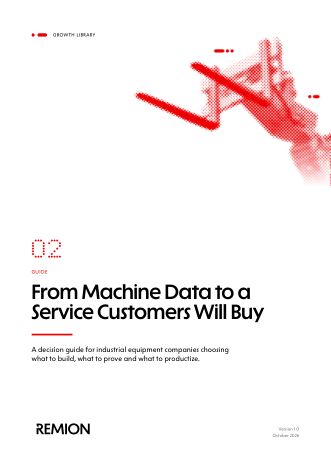
From Machine Data to a Service Customers Will Buy
The guide shows how to productize before scaling the technology, so that success can repeat without hero work.
Read the guide →Ready to take the next step?
Let’s explore how data can improve your operations, unlock new revenue, and drive smarter decisions.

